
If you’ve lived through a Michigan year, you already know: our weather doesn’t mess around. Lake-effect snow in January, ice storms in February, pollen bombs in May, thunderstorm after thunderstorm in July, and brilliant but leaf-littered Octobers. Through all of it, one part of your home is catching every bit of weather head-on: your windows.
At Moonwalker Window Cleaning, we clean windows in every Michigan season. Here’s what our weather actually does to your glass, and what you can do about it.
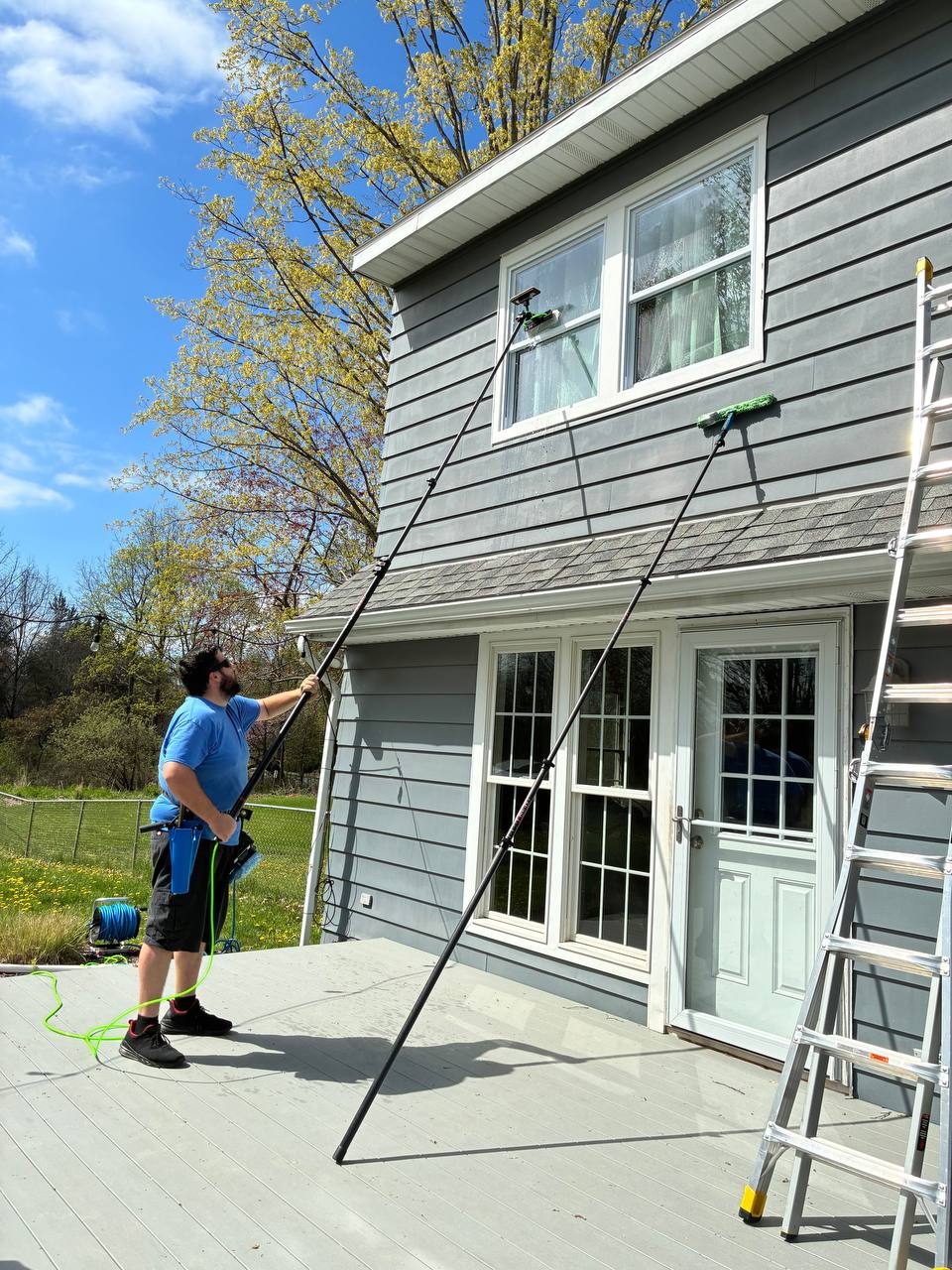
Winter: Salt, Snow, and Temperature Swings
Michigan winters put windows through a real workout. Three things do most of the damage:
- Salt and road spray. If you’re near a busy road, plowed driveway, or parking lot, salty mist travels farther than you’d think. It lands on glass, dries into a filmy haze, and etches the surface if it sits long enough.
- Snow melt runoff. When snow piled on a roof melts and drips down, it carries dirt, shingle granules, and minerals straight onto your upper-floor windows. That’s where those persistent streaks above the frame come from.
- Extreme temperature swings. Glass expands and contracts. Seals stress. Dust and moisture that work their way into tiny gaps freeze, then thaw, then freeze again. This is why winter is hard on older windows and sealed units.
What to do: Don’t try to clean exterior glass in freezing temperatures — water freezes before you can squeegee it, and warm water against cold glass can actually crack a pane. Wait for a thaw day above 40°F, or book a pro who knows how to handle cold-weather cleaning safely.
Spring: Pollen, Rain Spots, and Winter Leftovers
West Michigan springs are beautiful and brutal. The second our trees start budding, pollen coats every flat surface — and windows act like a giant pollen magnet. Then the spring storms roll in, and the rain splashes dust and mineral deposits all over the glass. Even a quick sun-shower leaves behind visible spotting.
Add in everything winter left behind (salt film, snow-melt streaks, bird activity), and by mid-April most Grand Rapids homes have windows that look markedly grimy — even if they were clean in November.
What to do: Spring is the time to book a deep clean. One good professional cleaning resets your windows for the whole year, and most local homes benefit from a spring + fall schedule.
Summer: Thunderstorms, Humidity, and Bugs
Summer in West Michigan is a tug-of-war between “perfect lake day” and “severe thunderstorm watch until 11 PM.” For windows, summer means:
- Hard water spotting. Rain isn’t the purest water. Every storm carries trace minerals that dry into visible spots on glass. After a few storms, that spotting compounds.
- Humidity streaks. High humidity means condensation forms on cool glass (especially on air-conditioned homes), and dust clings to the moisture film.
- Bug residue. Gnats, flies, and spiders love window frames and screens. Spider webs accumulate in corners, and bug residue bakes onto glass in direct sun.
- Tree sap and seed drops. Maples, oaks, and pines all shed something onto whatever’s below them. That includes your windows.
What to do: Midsummer is a great time for a mid-season refresh, especially if you entertain outdoors or have big picture windows facing the yard. Hard water spotting in particular is easier to remove fresh than after it’s baked on for months.
Fall: Leaves, Acorns, and the Last Warm Days
Fall is our favorite season for window cleaning, and here’s why: it sets your windows up for winter. Every bit of summer grime, pollen dust, tree sap, and bug residue gets cleared off before the snow flies. That means winter’s salt and snowmelt are hitting clean glass, not compounding on top of existing buildup.
Fall also brings its own challenges:
- Wet leaves against windows and screens. A wet leaf stuck against a screen for a day leaves a visible outline that’s surprisingly hard to scrub off.
- Acorns and seed pods. These hit windows harder than you’d think, and sometimes they leave scuffs.
- Heavy dew. Cool fall mornings mean condensation that carries dust and pollen onto the glass surface.
What to do: Book a cleaning in late September or October before the first hard frost. You’ll enter winter with clean glass and a better view during the darker months when daylight matters most.
Michigan-Specific Weather Issues
A few things hit Grand Rapids and West Michigan windows harder than other parts of the country:
- Lake effect. Proximity to Lake Michigan means more humidity, more cloud cover, and more windborne particulates than inland Michigan.
- Hard water. Much of West Michigan has naturally hard water. If your sprinklers hit your windows, or if you wash your siding with a hose, the mineral content leaves spots that are tough to remove once baked on.
- Four full seasons. Unlike milder climates, we get all four seasons at full volume. That means more overall wear on glass and seals.
Why Water Fed Pole Cleaning Handles Michigan Weather Better
Traditional window cleaning uses tap water, soap, and a squeegee. In Michigan, that approach has problems:
- Hard tap water leaves spots when it dries
- Soap residue attracts dust and dirt, so windows get dirty faster
- Ladders struggle in wet or uneven ground — common after storms
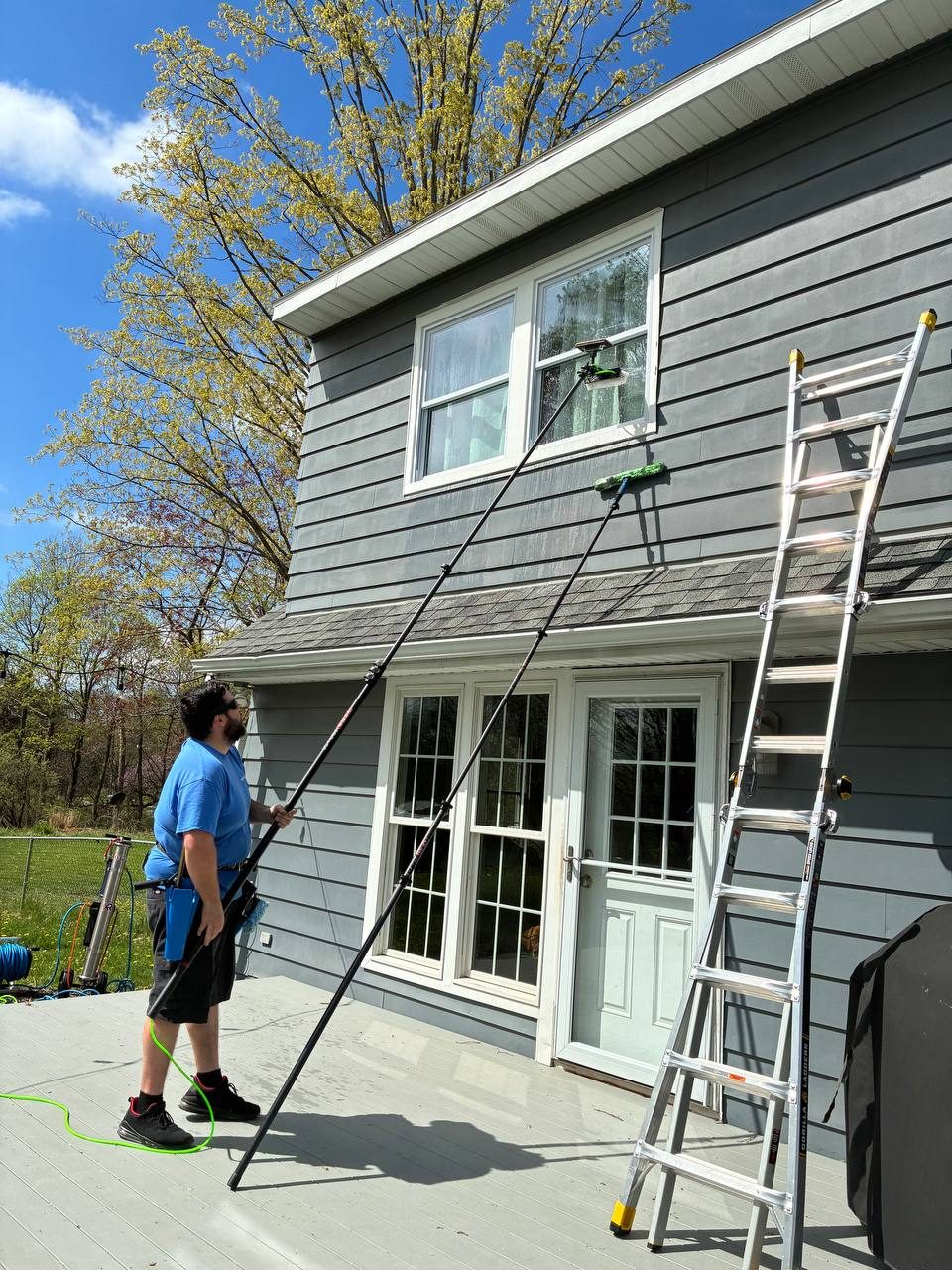
Water fed pole cleaning with deionized water solves all three. The water has zero mineral content, so it dries spot-free even in hard-water areas. There’s no soap, so there’s nothing for dust to stick to afterward — windows stay cleaner longer. And the operator stays safely on the ground, not balancing on a ladder in soft spring soil or on a rain-slick deck.
When Should You Book Your Next Cleaning?
Here’s the simple rule we give every new Grand Rapids customer:
- Twice a year (spring and fall) for most homes
- Three or four times a year if you’re near a busy road, have heavy tree cover, or have hard water sprinklers
- Monthly or quarterly for commercial storefronts
The payoff: your windows always look sharp, your view stays clear, and you avoid the baked-on buildup that’s expensive to remove once it’s set.
Ready to Reset Your Windows for the Season?
Moonwalker Window Cleaning serves Grand Rapids, Jenison, Grandville, Hudsonville, Forest Hills, Ada, Cascade, Kentwood, Wyoming, and all of West Michigan. We use water fed pole technology and pure deionized water — Michigan-hard-water-proof, no ladders on your home, and safe in every season.